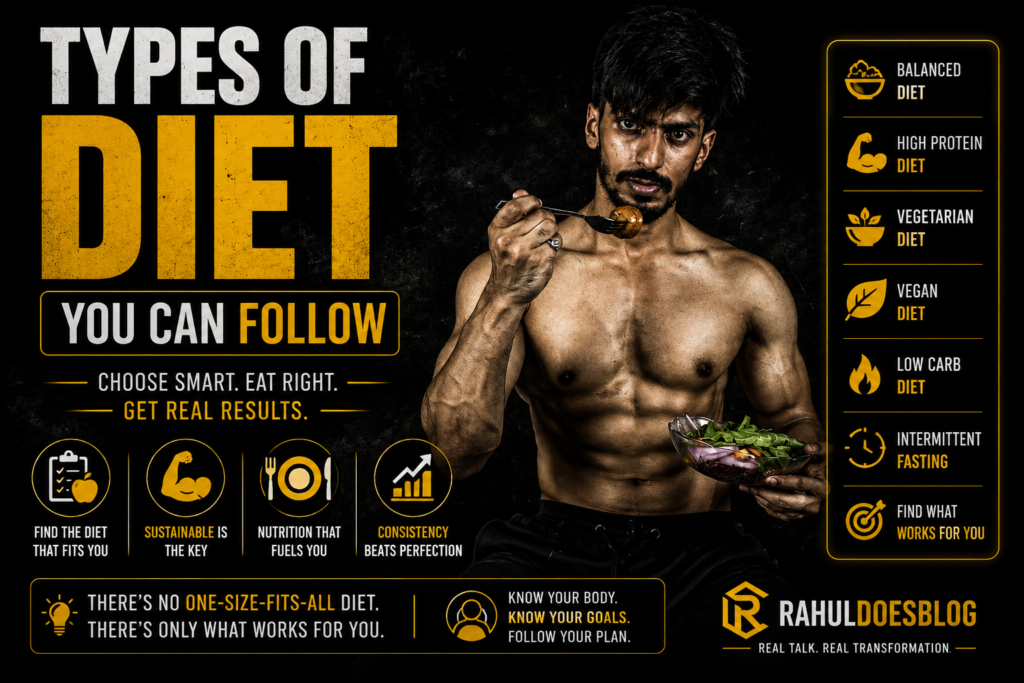
With hundreds of diets trending online at any given moment, it can feel overwhelming to figure out which one actually works. The truth is that no single diet is perfect for everyone — the best diet is the one that fits your lifestyle, goals, and food preferences while keeping you in a consistent calorie deficit.
In this article, we break down 6 of the most effective and science-backed diets for weight loss and fat loss. Whether you prefer cutting carbs, eating in time windows, or simply eating cleaner whole foods, there is an approach here for you. Each one has been shown to produce real, measurable results when followed consistently.
1. The Ketogenic Diet (Keto)
Best For: People who want rapid fat loss and can commit to a very low-carb lifestyle.
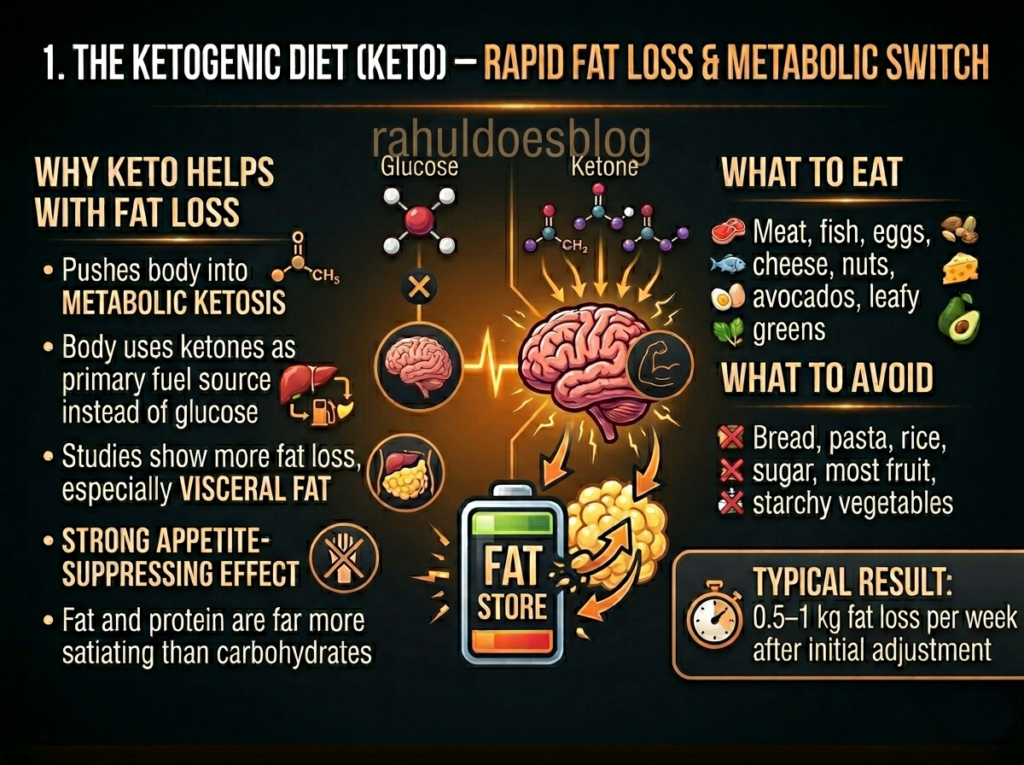
The ketogenic diet is one of the most talked-about fat loss approaches of the last decade — and for good reason. By drastically reducing carbohydrate intake to under 50 grams per day and replacing those calories with healthy fats and moderate protein, your body is pushed into a metabolic state called ketosis. In ketosis, your liver converts stored fat into molecules called ketones, which become your body’s primary fuel source instead of glucose.
This switch is powerful for fat loss. Studies have consistently shown that people on a ketogenic diet lose more fat — especially visceral belly fat — in the short term compared to low-fat dieters. Keto also has a strong appetite-suppressing effect, largely because fat and protein are far more satiating than refined carbohydrates.
What to Eat: Meat, fish, eggs, cheese, nuts, avocados, olive oil, leafy greens. What to Avoid: Bread, pasta, rice, sugar, most fruit, starchy vegetables. Typical Result: 0.5–1 kg of fat loss per week after the initial adjustment period.
2. Intermittent Fasting (IF)
Best For: People who prefer simplicity and do not want to change what they eat — just when they eat.
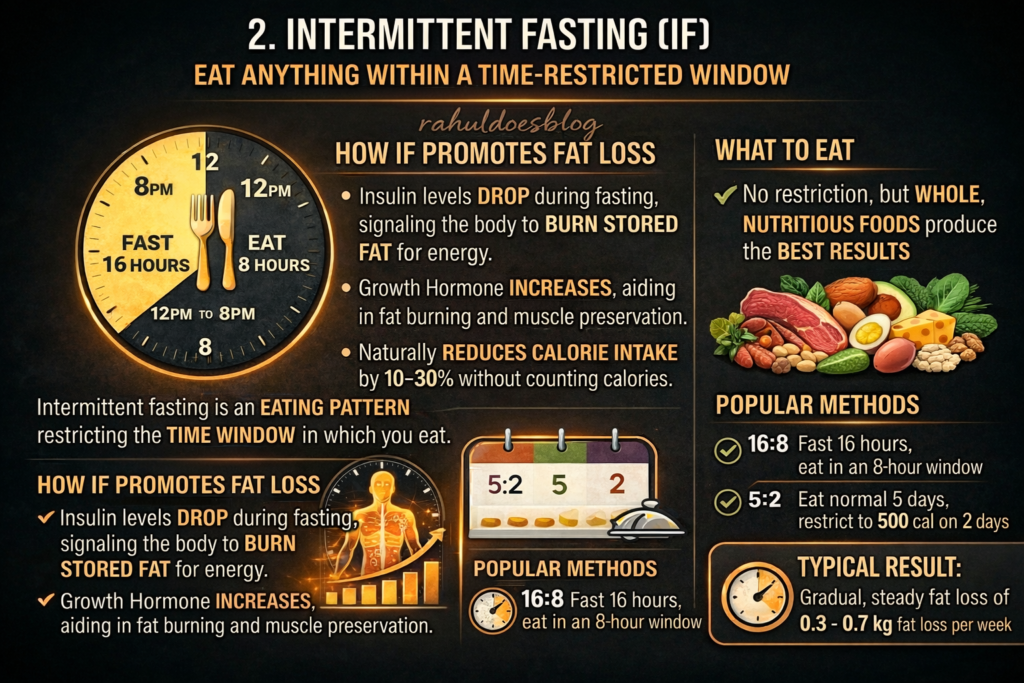
Intermittent fasting is not a diet in the traditional sense — it is an eating pattern. Rather than restricting specific foods, IF restricts the time window in which you eat. The most popular method is the 16:8 protocol — fasting for 16 hours and eating all your meals within an 8-hour window (for example, noon to 8pm).
During the fasting window, insulin levels drop significantly, which signals the body to access stored fat as an energy source. Growth hormone levels also increase during fasting, which supports fat burning and muscle preservation simultaneously. Research shows that IF can reduce overall calorie intake by 10 to 30 percent without deliberate calorie counting, making it a highly sustainable approach for many people.
Popular Methods: 16:8 (most common), 5:2 (eat normally 5 days, restrict to 500 calories 2 days), OMAD (one meal a day). What to Eat: No restriction — but whole, nutritious foods produce the best results. Typical Result: Gradual, steady fat loss of 0.3–0.7 kg per week.
3. The Mediterranean Diet
Best For: People who want long-term, sustainable fat loss without strict rules or restriction.
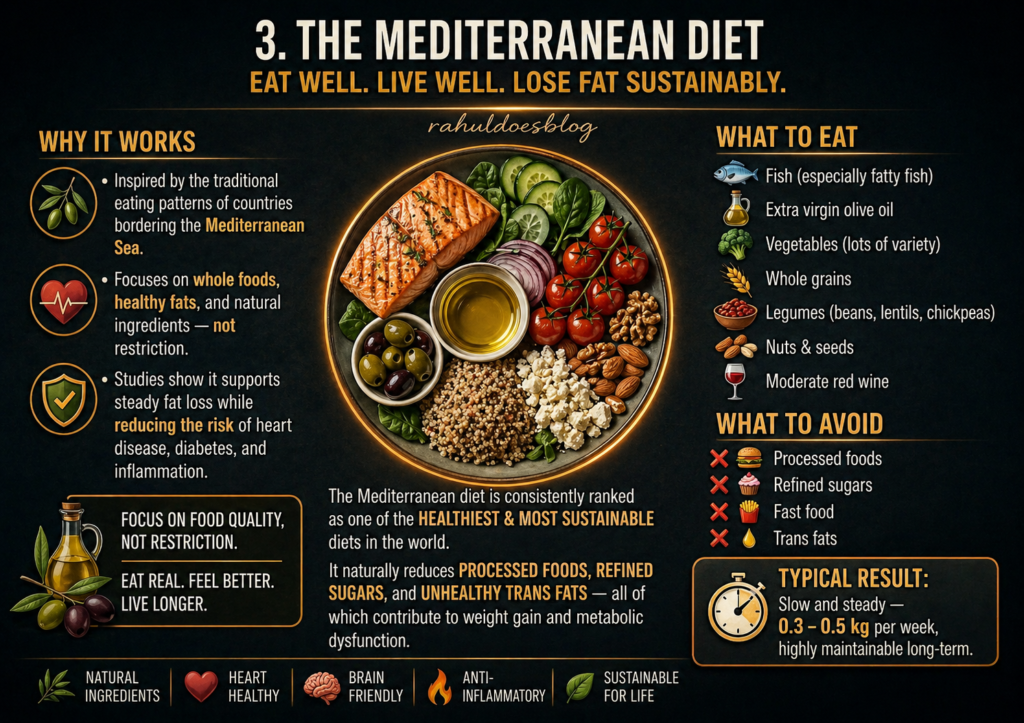
The Mediterranean diet is consistently ranked as one of the healthiest and most sustainable diets in the world. Inspired by the traditional eating patterns of countries bordering the Mediterranean Sea, it emphasises whole grains, vegetables, fruits, legumes, fish, and healthy fats — particularly extra virgin olive oil.
Unlike restrictive diets, the Mediterranean approach is about food quality rather than rigid rules. It naturally reduces processed food intake, refined sugars, and unhealthy trans fats — all of which contribute to weight gain and metabolic dysfunction. Studies show it produces steady, long-term fat loss while simultaneously reducing the risk of heart disease, diabetes, and inflammation.
What to Eat: Fish, olive oil, vegetables, whole grains, legumes, nuts, moderate red wine. What to Avoid: Processed foods, refined sugars, fast food, trans fats. Typical Result: Slow and steady — 0.3–0.5 kg per week, highly maintainable long-term.
4. The Low-Carb Diet
Best For: People who want the benefits of keto without going fully ketogenic.
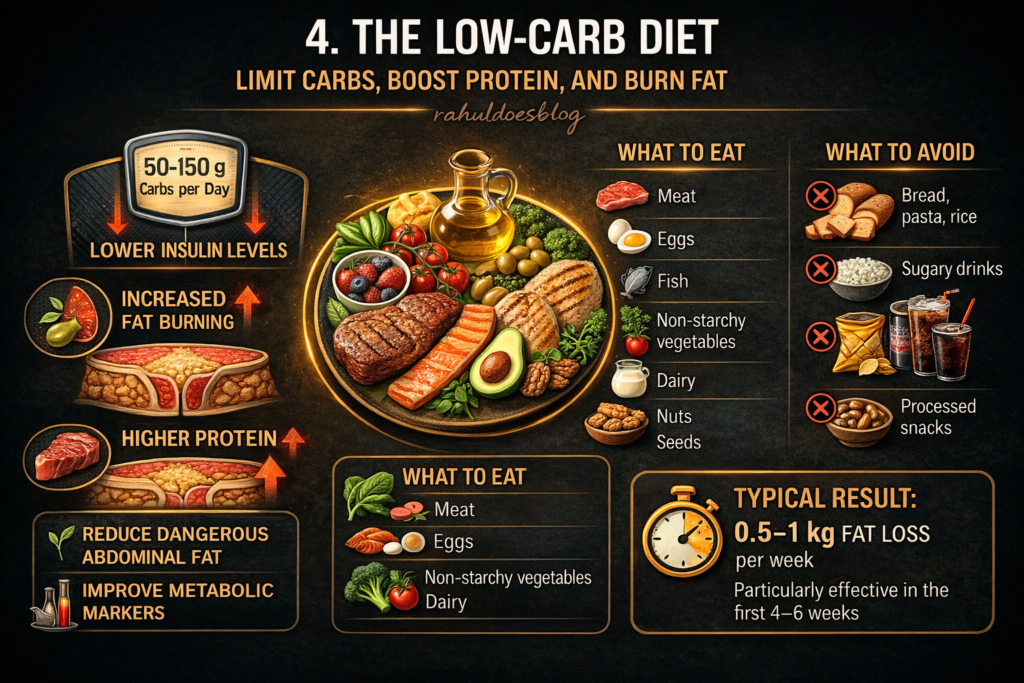
A low-carb diet reduces carbohydrate intake — typically to between 50 and 150 grams per day — without necessarily reaching the state of ketosis. This makes it a more flexible and approachable alternative to strict keto while still delivering strong fat loss results.
By reducing carbs, insulin levels are lowered and the body shifts toward burning more fat for energy. Protein intake is typically higher on a low-carb diet, which has a high thermic effect — meaning your body burns more calories just digesting it. Low-carb diets are particularly effective at reducing dangerous abdominal fat and improving metabolic markers like blood sugar and triglycerides.
What to Eat: Meat, eggs, fish, non-starchy vegetables, dairy, nuts, seeds. What to Avoid: Bread, pasta, rice, sugary drinks, processed snacks, most desserts. Typical Result: 0.5–1 kg per week, particularly effective in the first 4–6 weeks.
5. The DASH Diet
Best For: People who want fat loss alongside improved heart health and blood pressure control.
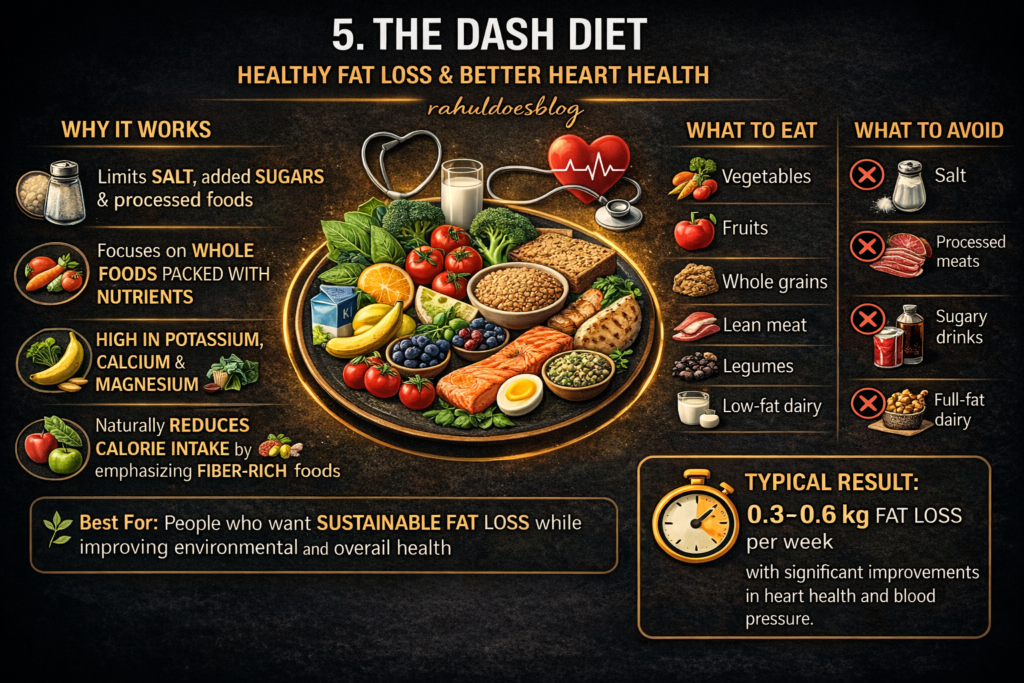
DASH stands for Dietary Approaches to Stop Hypertension, but its benefits extend well beyond blood pressure. Originally developed to reduce hypertension, the DASH diet has proven to be an effective tool for fat loss, particularly because it eliminates the processed, high-sodium, and high-sugar foods that are major contributors to both weight gain and poor health.
The DASH diet focuses on nutrient-dense whole foods — vegetables, fruits, whole grains, lean proteins, and low-fat dairy — while strictly limiting salt, red meat, and added sugars. It does not restrict calories explicitly but naturally creates a calorie deficit through its emphasis on high-fibre, high-volume foods that fill you up without excess energy.
What to Eat: Vegetables, fruits, whole grains, lean meat, legumes, low-fat dairy. What to Avoid: Salt, processed meats, sugary drinks, full-fat dairy, fried foods. Typical Result: 0.3–0.6 kg per week with significant improvements in overall health markers.
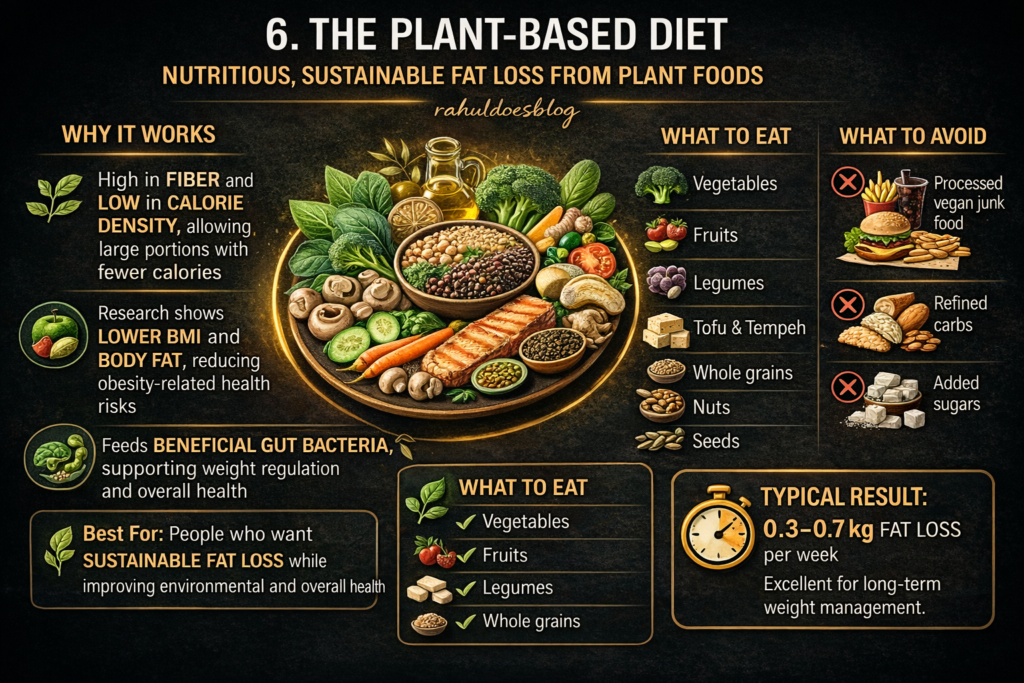
6. The Plant-Based Diet
Best For: People who want sustainable fat loss while reducing their environmental footprint and improving overall health.
A plant-based diet centres on foods derived from plants — vegetables, fruits, legumes, whole grains, nuts, and seeds — while minimising or eliminating animal products. It does not have to be fully vegan; even a flexitarian approach (mostly plant-based with occasional meat) delivers significant fat loss benefits.
Plant-based diets are naturally high in fibre and low in calorie density, meaning you can eat a large volume of food while consuming fewer calories. Research shows that people following plant-based diets tend to have lower BMI, less body fat, and a reduced risk of obesity-related conditions. The high fibre content also feeds beneficial gut bacteria, which plays a growing role in weight regulation.
What to Eat: Vegetables, fruits, legumes, tofu, tempeh, whole grains, nuts, seeds. What to Avoid: Processed vegan junk food (still calorie-dense), refined carbs, added sugars. Typical Result: 0.3–0.7 kg per week, excellent for long-term weight management.
Which Diet Is Best for You?
There is no single winner. The best diet for fat loss is the one you can stick to consistently. Here is a quick guide to help you choose:
- Want fast results? → Try Keto or Low-Carb
- Want simplicity without food rules? → Try Intermittent Fasting
- Want long-term, balanced eating? → Try Mediterranean or DASH
- Care about health and environment? → Try Plant-Based
Whichever approach you choose, the fundamentals remain the same: eat mostly whole foods, stay in a moderate calorie deficit, move your body regularly, and prioritise sleep. All six diets above work when followed correctly — the key is consistency over perfection.
Final Thoughts
Fat loss does not require an extreme approach. Each of these six diets — Keto, Intermittent Fasting, Mediterranean, Low-Carb, DASH, and Plant-Based — has solid scientific support and real-world results behind it. Start with the one that feels most natural to your current lifestyle, commit to it for at least 8 to 12 weeks, and track your progress.
Remember: the best diet is not the most popular one — it is the one that works for you.
Disclaimer: This article is for informational and educational purposes only. Please consult a registered dietitian or healthcare professional before making significant changes to your diet.