Introduction
In the first part of this series, we covered the three foundational pillars of fat loss — diet, training and cardio. We established that diet creates the deficit, training preserves muscle and cardio accelerates the process.
Now it is time to put that framework into practice with food that is actually available in Indian kitchens, affordable to prepare every day, and culturally familiar enough to be sustainable for the long term.
The biggest problem with most online fat loss diet plans is that they are built around chicken breast, broccoli, brown rice and protein bars. While those foods work perfectly well, they are not what most people in India eat or enjoy. Sustainability is everything in fat loss. A diet you can follow for 12 weeks beats a perfect diet you abandon after 10 days every single time.
This article gives you two complete, practical Indian diet plans:
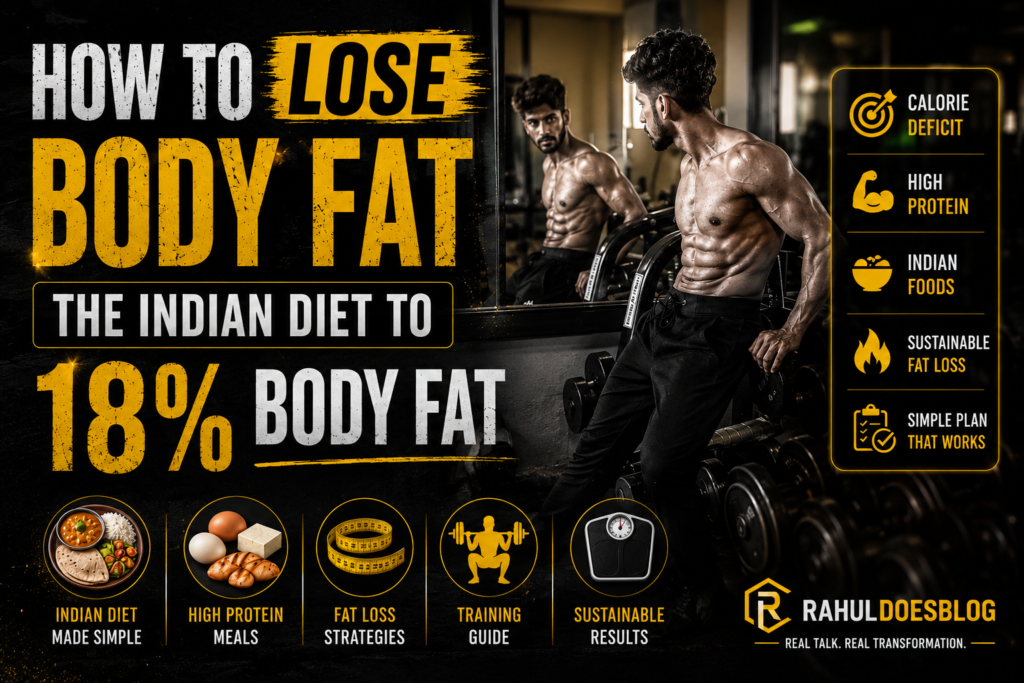
Phase 1 — designed to take you from 25% to 21% body fat with a moderate deficit, accessible foods and a structured but flexible eating schedule.
Phase 2 — designed to take you from 21% to 18% body fat with a tighter deficit, strategic carb cycling, higher protein and stricter food choices for the leaner, more demanding phase of your journey.
Before You Begin — Know Your Numbers
Before starting either phase, you need two numbers: your maintenance calories and your protein target.
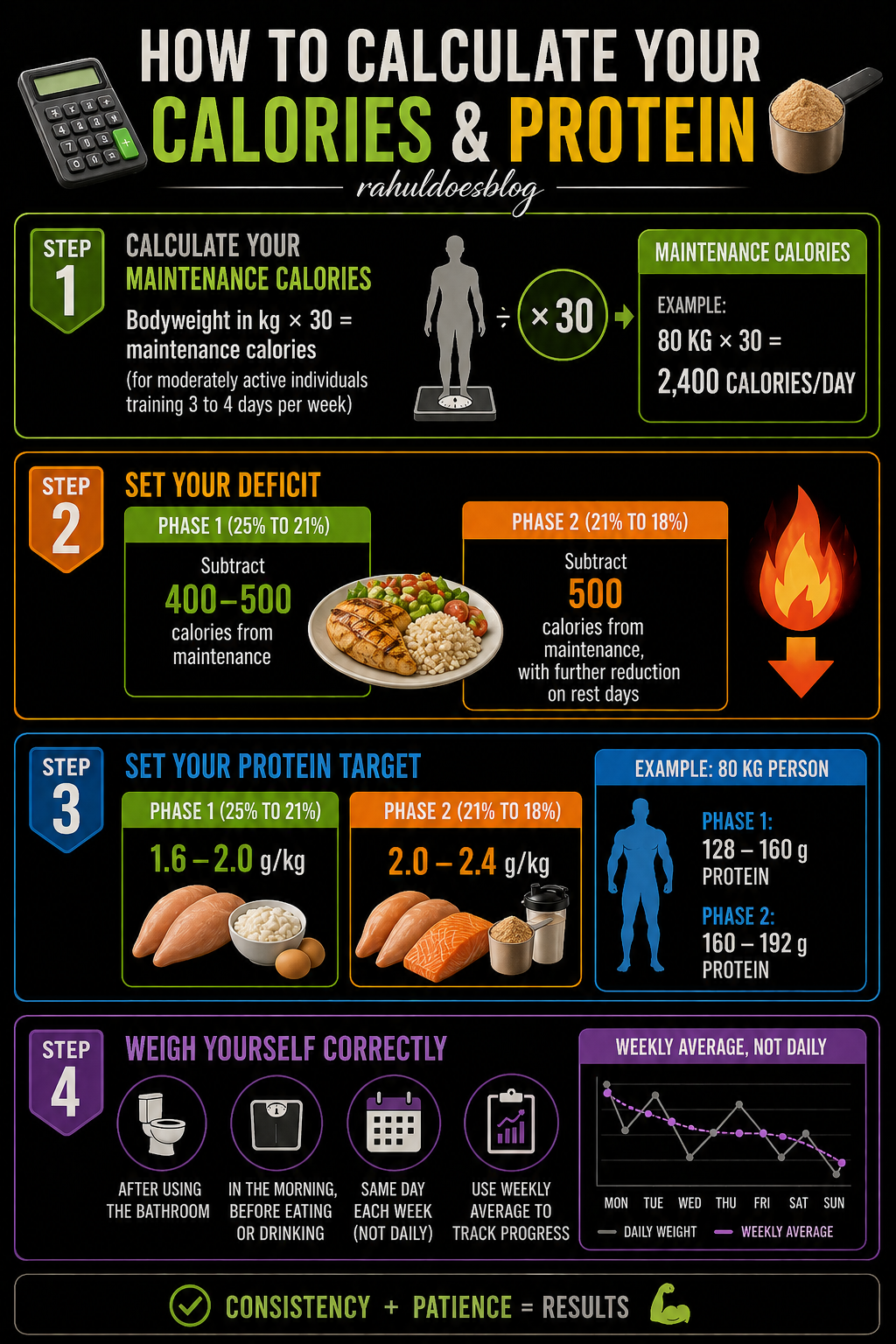
Step 1 — Calculate Your Maintenance Calories
Use this simple formula as a starting point:
Bodyweight in kg × 30 = approximate maintenance calories (for moderately active individuals training 3 to 4 days per week)
For example, an 80 kg person has a maintenance of approximately 2,400 calories per day.
Step 2 — Set Your Deficit
- Phase 1: Subtract 400 to 500 calories from maintenance
- Phase 2: Subtract 500 calories from maintenance, with further reduction on rest days
Step 3 — Set Your Protein Target
- Phase 1: 1.6 to 2.0 grams per kilogram of bodyweight
- Phase 2: 2.0 to 2.4 grams per kilogram of bodyweight
For an 80 kg person this means 128 to 160 grams of protein in Phase 1 and 160 to 192 grams in Phase 2.
Step 4 — Weigh Yourself Correctly
Weigh yourself first thing in the morning after using the bathroom and before eating or drinking anything. Do this on the same day each week — not daily. Use a weekly average to track progress, not individual daily readings which fluctuate due to water, food volume and hormones.
Foods to Prioritise in Both Phases
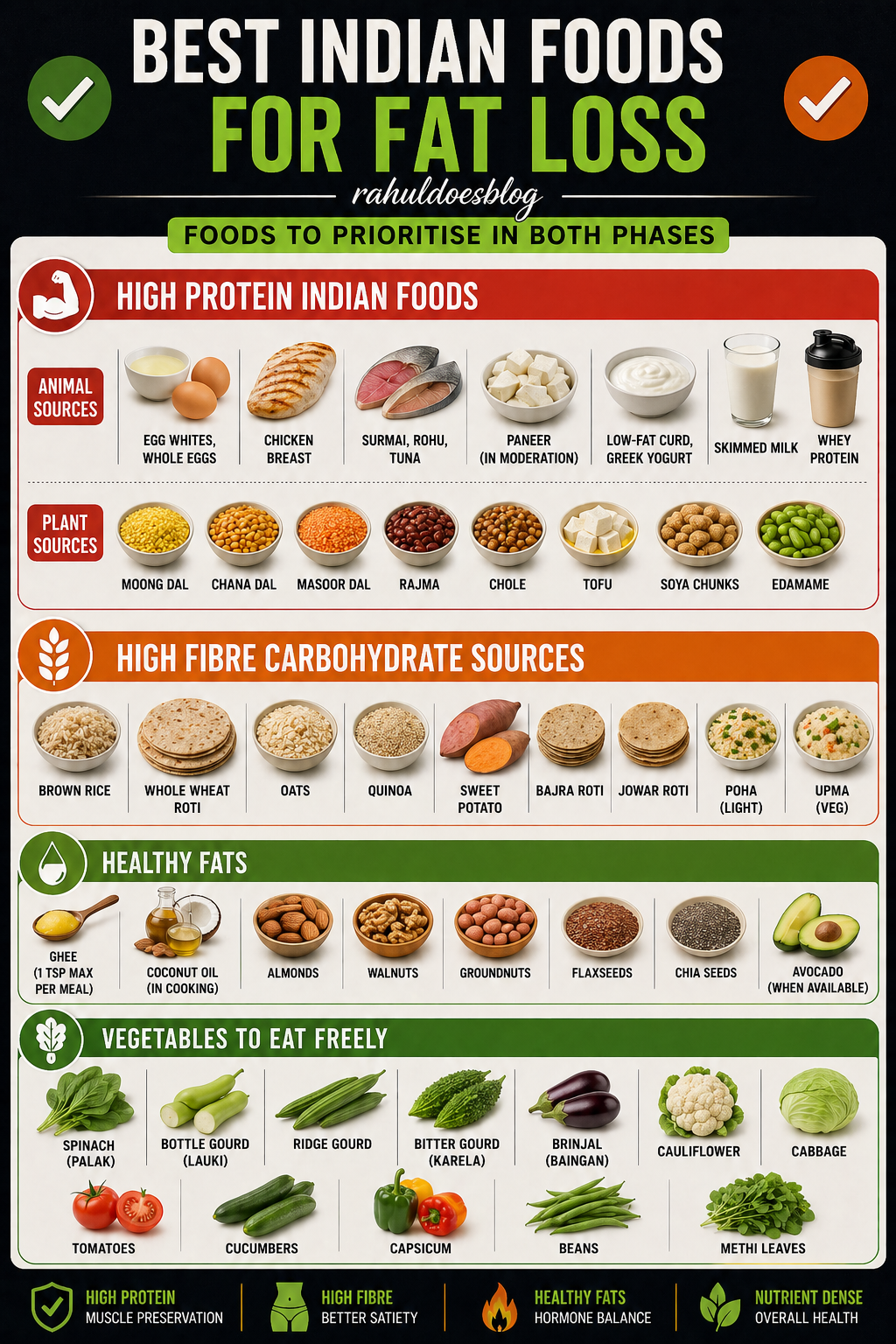
Before getting into the meal plans, here are the Indian foods that form the backbone of both phases. These are your go-to options across all meals.
High Protein Indian Foods
Animal sources: Egg whites, whole eggs, chicken breast, surmai (kingfish), rohu, tuna, paneer (in moderation — higher in fat), low-fat curd, Greek yogurt, skimmed milk, whey protein
Plant sources: Moong dal, chana dal, masoor dal, rajma, chole, tofu, soya chunks, edamame
High Fibre Carbohydrate Sources
Brown rice, whole wheat roti, oats, quinoa, sweet potato, bajra roti, jowar roti, poha (light), upma (made with vegetables)
Healthy Fats
Ghee (one teaspoon maximum per meal), coconut oil (in cooking), almonds, walnuts, groundnuts, flaxseeds, chia seeds, avocado (when available)
Vegetables to Eat Freely
Spinach (palak), bottle gourd (lauki), ridge gourd, bitter gourd (karela), brinjal (baingan), cauliflower, cabbage, tomatoes, cucumbers, capsicum, beans, methi leaves
Foods to Eliminate in Both Phases
Getting lean requires cutting certain foods entirely — not reducing them, but removing them from your daily routine.
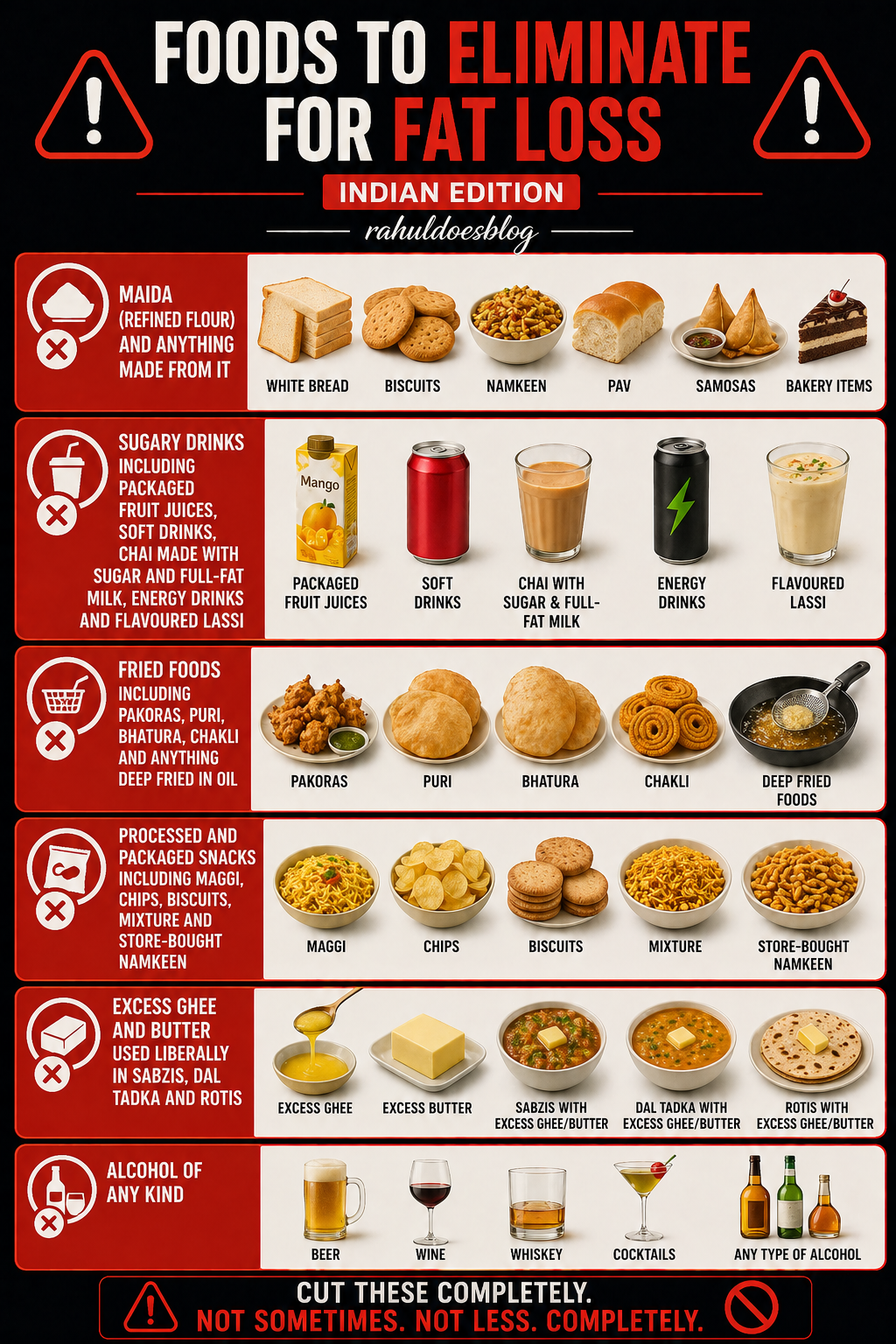
Maida (refined flour) and anything made from it — white bread, biscuits, namkeen, pav, samosas and most bakery items. Sugary drinks including packaged fruit juices, soft drinks, chai made with sugar and full-fat milk, energy drinks and flavoured lassi. Fried foods including pakoras, puri, bhatura, chakli and anything deep fried in oil. Processed and packaged snacks including Maggi, chips, biscuits, mixture and store-bought namkeen. Excess ghee and butter used liberally in sabzis, dal tadka and rotis. Alcohol of any kind, as it directly inhibits fat oxidation for up to 36 hours after consumption.
Phase 1 Indian Diet Plan — 25% to 21% Body Fat
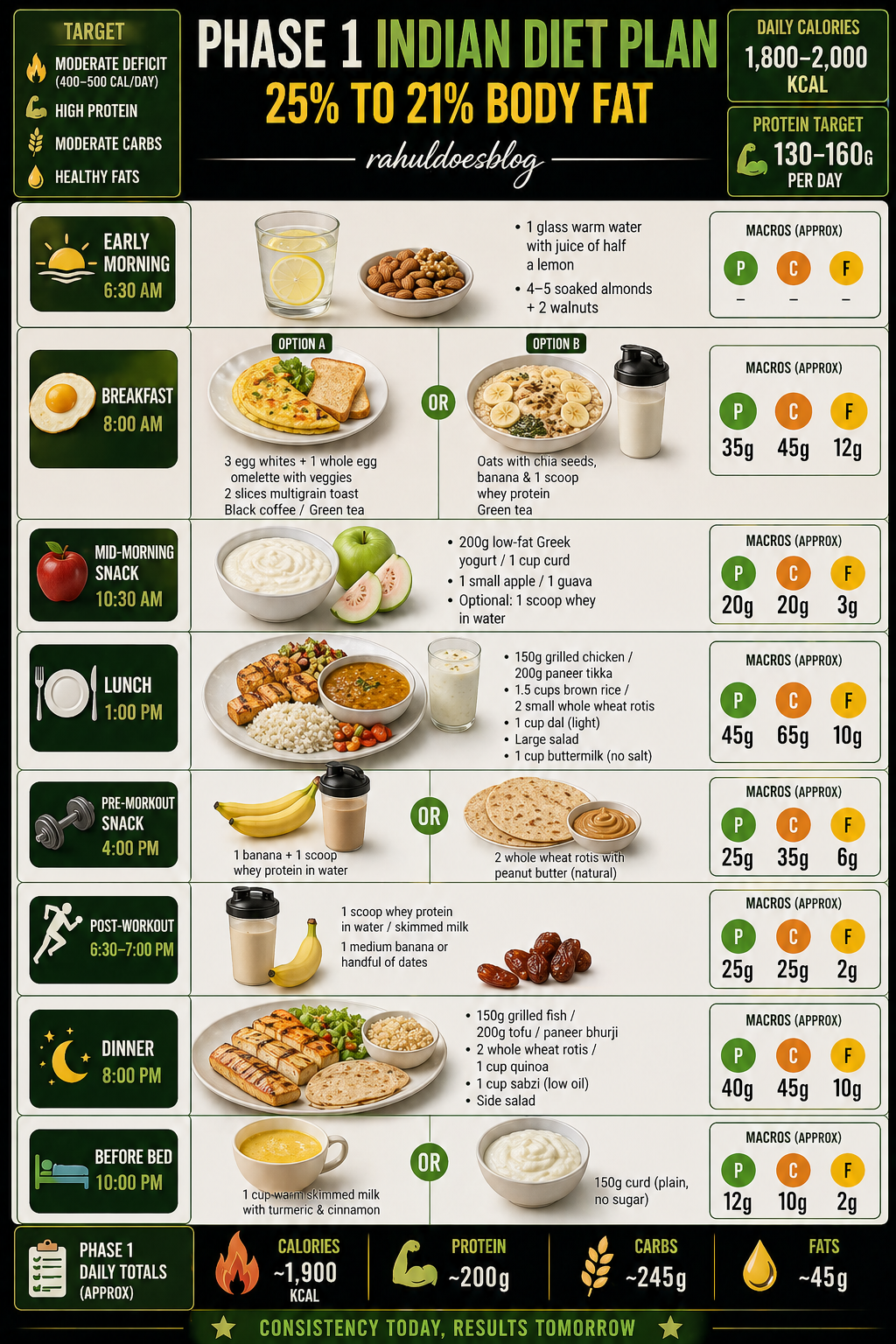
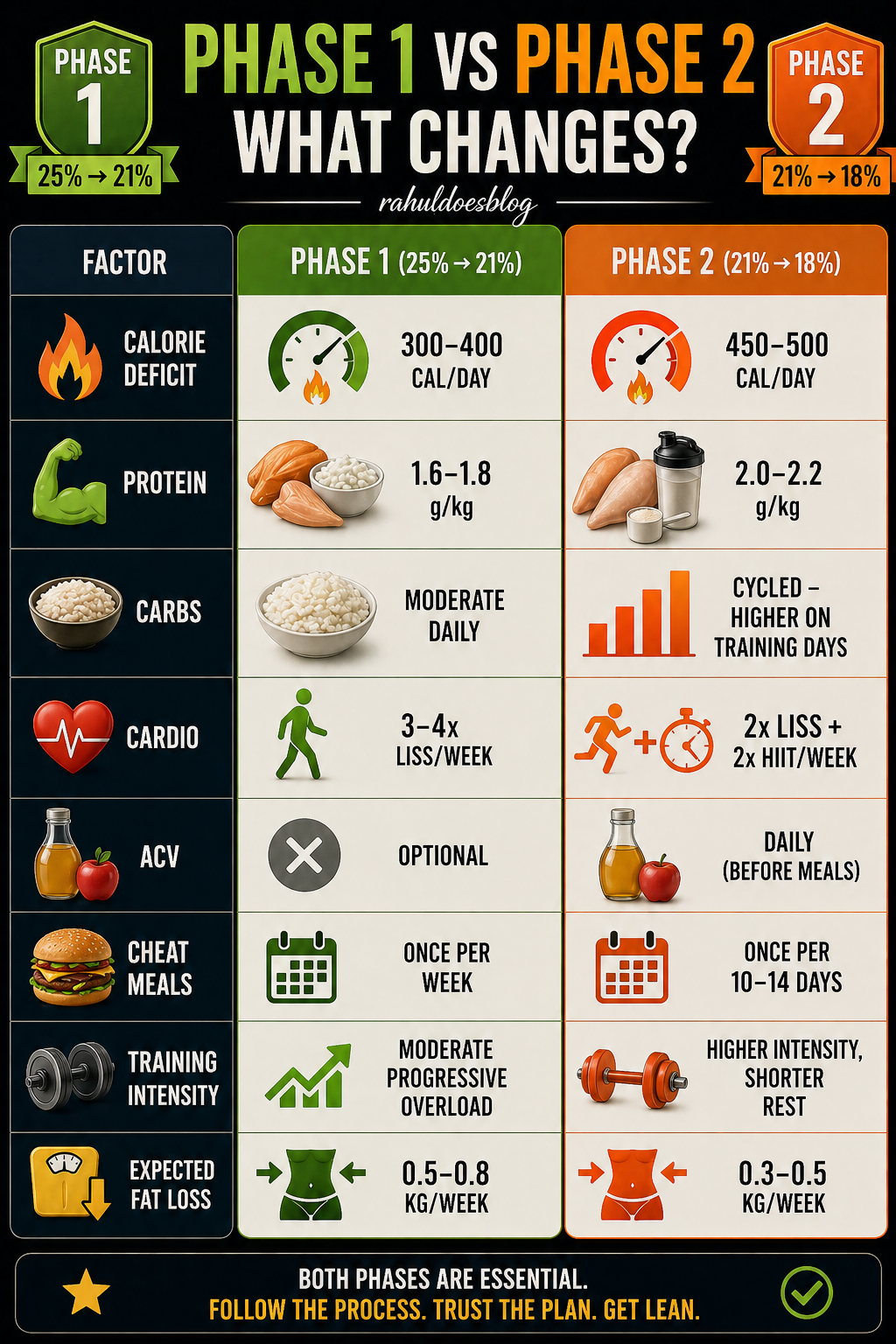
Goal: Create a moderate and sustainable calorie deficit while building healthy eating habits Daily Calorie Target: Maintenance minus 400 to 500 calories (approximately 1,800 to 2,000 kcal for a 75 to 85 kg individual) Protein Target: 140 to 165 grams per day Carbohydrates: Moderate — present at every meal but portion-controlled Training Days vs Rest Days: Same meal plan applies in Phase 1. No carb cycling required yet. Duration: 8 to 12 weeks depending on starting point and consistency Expected Fat Loss: 0.5 to 0.8 kg per week
Phase 1 Rules to Follow
Follow these non-negotiable rules throughout Phase 1 to ensure consistent fat loss without plateauing early.
Cook all proteins without deep frying — grill, bake, boil, steam or air fry every time. Use a maximum of one teaspoon of oil per meal when cooking sabzi or eggs. Drink a minimum of 3 litres of water daily — dehydration is consistently mistaken for hunger. Eat at roughly the same times each day to regulate hunger hormones and cortisol. Allow yourself one planned cheat meal per week — not a cheat day — to maintain adherence and support hormonal health. Get 7 to 8 hours of sleep every night — poor sleep raises cortisol and ghrelin (the hunger hormone), both of which directly sabotage fat loss.
Phase 2 Indian Diet Plan — 21% to 18% Body Fat
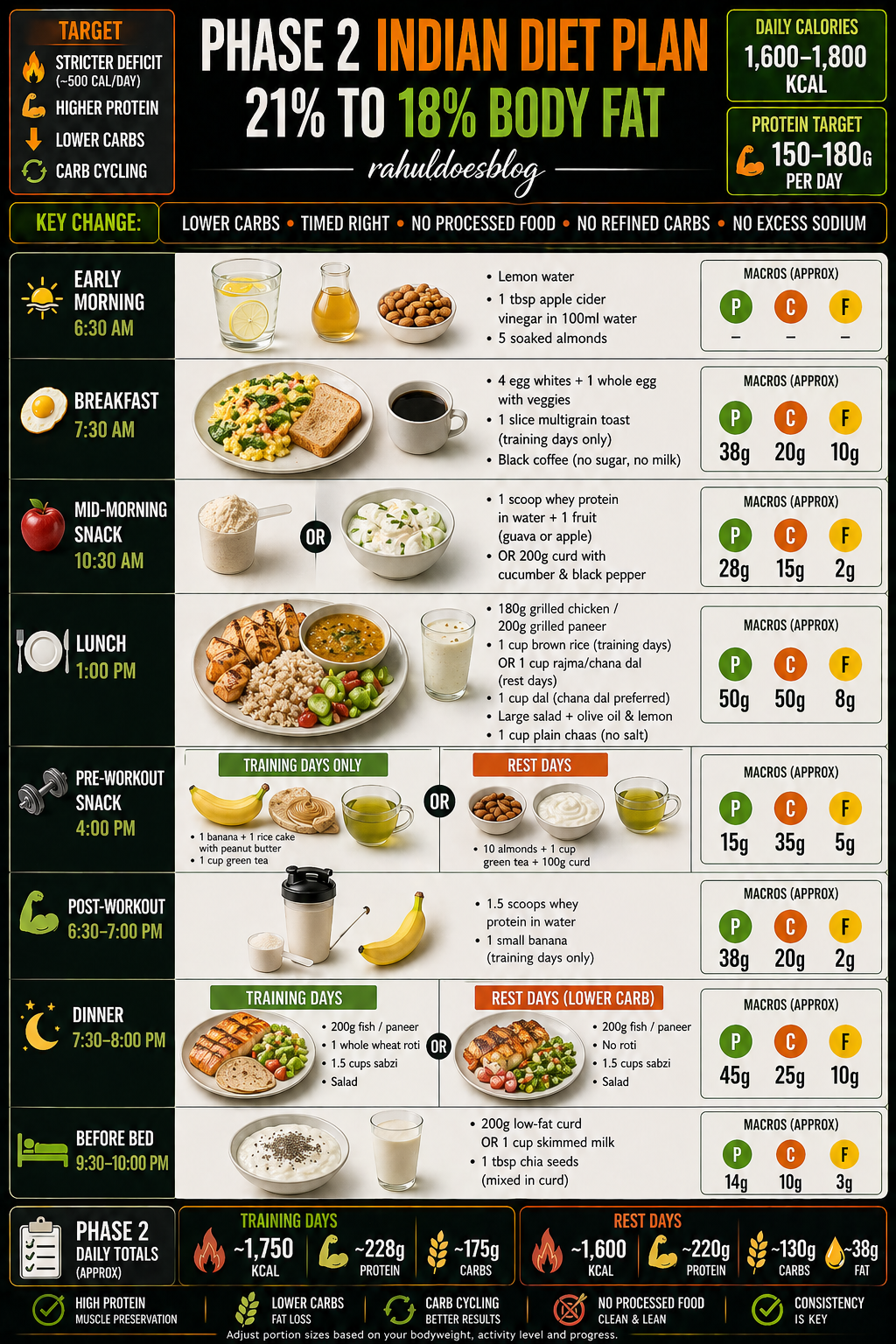
Goal: Break through the natural plateau that occurs at lower body fat levels with a tighter deficit, carb cycling and higher protein Daily Calorie Target: Maintenance minus 500 calories on training days, maintenance minus 600 to 650 calories on rest days Protein Target: 165 to 195 grams per day Key Change: Carbohydrates are now cycled — higher on training days to fuel performance and lower on rest days to deepen the deficit Duration: 8 to 14 weeks Expected Fat Loss: 0.3 to 0.5 kg per week (slower is normal and expected at lower body fat levels)
What Changes in Phase 2 and Why
As you get leaner, your body becomes increasingly efficient at resisting fat loss. Leptin — the hormone that signals fullness and regulates metabolism — drops as body fat decreases. Your body also adapts to the diet and cardio it has been doing, meaning what worked in Phase 1 begins to produce diminishing returns.
Phase 2 addresses this through four key changes:
Calories drop slightly lower and are split by training day versus rest day. Protein increases to provide maximum muscle protection in a deeper deficit. Carbohydrates are strategically cycled — higher around workouts to fuel performance and promote muscle retention, lower on rest days to maximise fat burning when insulin is naturally lower. Apple cider vinegar is introduced as a daily tool to improve insulin sensitivity and blunt blood sugar spikes from meals.
Key Differences Between Phase 1 and Phase 2
Final Thoughts
Getting leaner is a process, not an event. The journey from 25% to 21% body fat is about building the habit — eating consistently well, training regularly and adding structured cardio. The journey from 21% to 18% is about dialling in the details — strategic carb timing, higher protein, more precise tracking and smarter cardio programming.
Both phases require the same mindset: consistency over perfection. You do not need to eat perfectly every single day. You need to make better decisions more often than not, recover well, train hard and trust the process.
Use the diet plans above as a starting point and adjust calories up or down based on your weekly progress. If fat loss stalls for two consecutive weeks, reduce calories by 100–150 or add one additional cardio session — not both at once.
Disclaimer: These diet plans are general guides for informational purposes. Nutritional needs vary by individual. Please consult a registered dietitian or sports nutritionist for personalised advice.