Table of Contents
Introduction
Of all the nutrition questions people ask, one stands out as the most consistently misunderstood: how much protein do you actually need per day?
Most people eat too little. Some are confused by conflicting advice — from government guidelines recommending a bare minimum, to fitness influencers claiming you need three grams per kilogram just to function. The truth sits firmly in the middle, and it is more practical than either extreme suggests.
Protein is the most important macronutrient for body composition — whether your goal is fat loss, muscle building or simply staying lean and healthy as you age. And getting your intake right does not require obsessive tracking or expensive supplements.
In this guide, we break down exactly how much protein you need, why it matters, and give you an interactive protein calculator to find your personal daily target in seconds.
What Does Protein Actually Do?
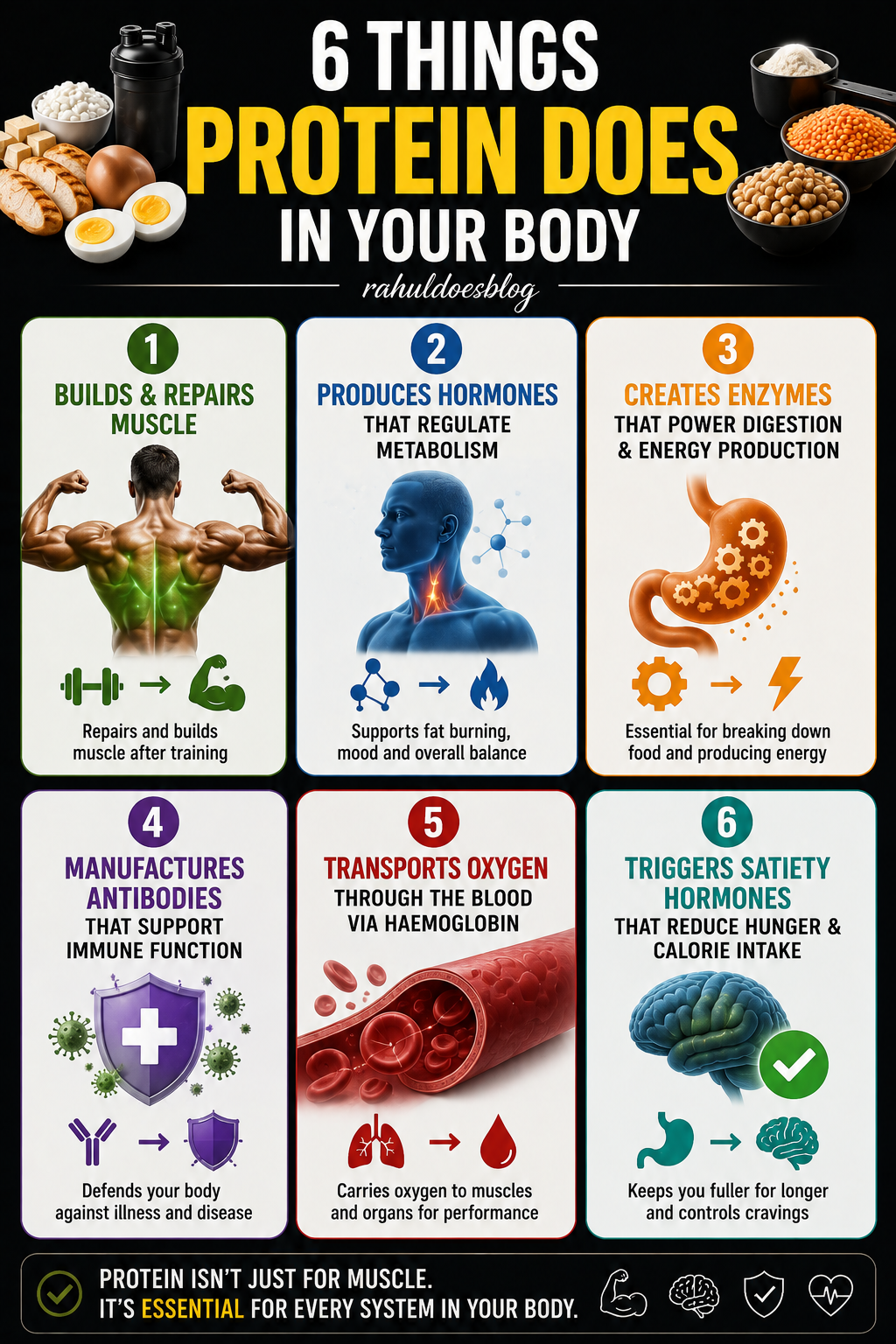
Most people associate protein with muscle — but it does far more than that. Protein is the structural material of your entire body. Every cell, enzyme, hormone and antibody is built from proteins.
Unlike carbohydrates (stored as glycogen) and fat (stored as body fat), protein is not stored as a reserve in your body. Every gram currently in your system is actively doing a job — building muscle, producing hormones, powering your immune system or signalling fullness to your brain.
When you do not eat enough protein, your body does not wait around. It breaks down your own muscle tissue to meet its needs — a process called muscle catabolism. This is the single biggest threat to anyone trying to lose fat, build muscle or maintain a strong metabolism as they age.
The six key functions of protein:
- Builds and repairs muscle tissue after training
- Produces hormones that regulate metabolism and fat burning
- Creates enzymes that power digestion and energy production
- Manufactures antibodies that support immune function
- Transports oxygen through the bloodstream via haemoglobin
- Triggers satiety hormones that naturally reduce hunger and calorie intake
Why the Government RDA Is Not Enough
The international Recommended Dietary Allowance (RDA) for protein is 0.8 grams per kilogram of bodyweight per day. For an 80 kg person, that is just 64 grams daily.
The problem is that the RDA represents the minimum required to prevent deficiency in a sedentary person — not the optimal intake for health, performance or body composition. It is the floor, not the ceiling.
Multiple peer-reviewed meta-analyses have found that the RDA is significantly underestimated for active individuals, people in a calorie deficit, anyone over 40 and regular gym-goers. For these groups, the RDA provides just enough protein to survive — not nearly enough to thrive.
The takeaway: treat the RDA as a deficiency threshold, not a goal.
How Much Protein Do You Actually Need?
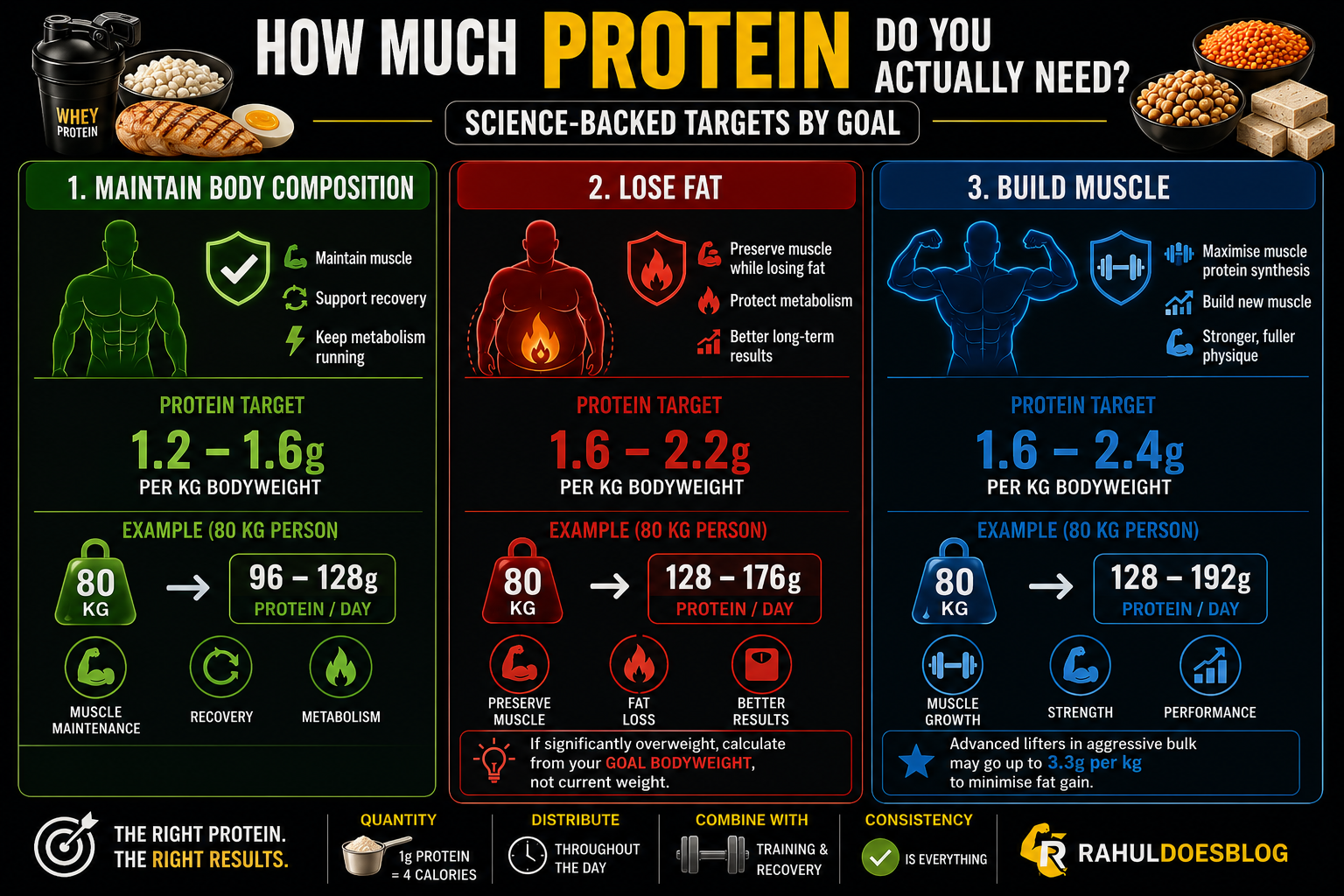
Your optimal protein intake depends on your bodyweight, goal and activity level. Here are the science-backed targets used by sports nutritionists worldwide.
To Maintain Body Composition
Aim for 1.2 to 1.6g per kg of bodyweight per day. For an 80 kg active person, this is 96 to 128 grams daily — enough to maintain muscle mass, support recovery and keep your metabolism running optimally.
To Lose Fat
In a calorie deficit, protein is your most powerful tool. Without sufficient intake, your body breaks down muscle alongside fat — shrinking your metabolism and making results harder to maintain. Aim for 1.6 to 2.2g per kg per day. If you are significantly overweight, calculate from your goal bodyweight, not your current weight.
For an 80 kg person cutting fat: 128 to 176 grams per day.
To Build Muscle
Muscle protein synthesis — the process of building new muscle — requires both resistance training and adequate protein. Without enough raw material, repair and growth remain incomplete. Aim for 1.6 to 2.4g per kg per day. Experienced lifters in an aggressive bulk may go up to 3.3g per kg to minimise fat gain.
For an 80 kg person building muscle: 128 to 192 grams per day.
🧮 Calculate Your Daily Protein Target
Stop guessing. Use the calculator embedded below to get your personalised protein range based on your weight, goal, activity level and training experience.
Daily Protein
Calculator
Enter your details below to get your personalised daily protein target.
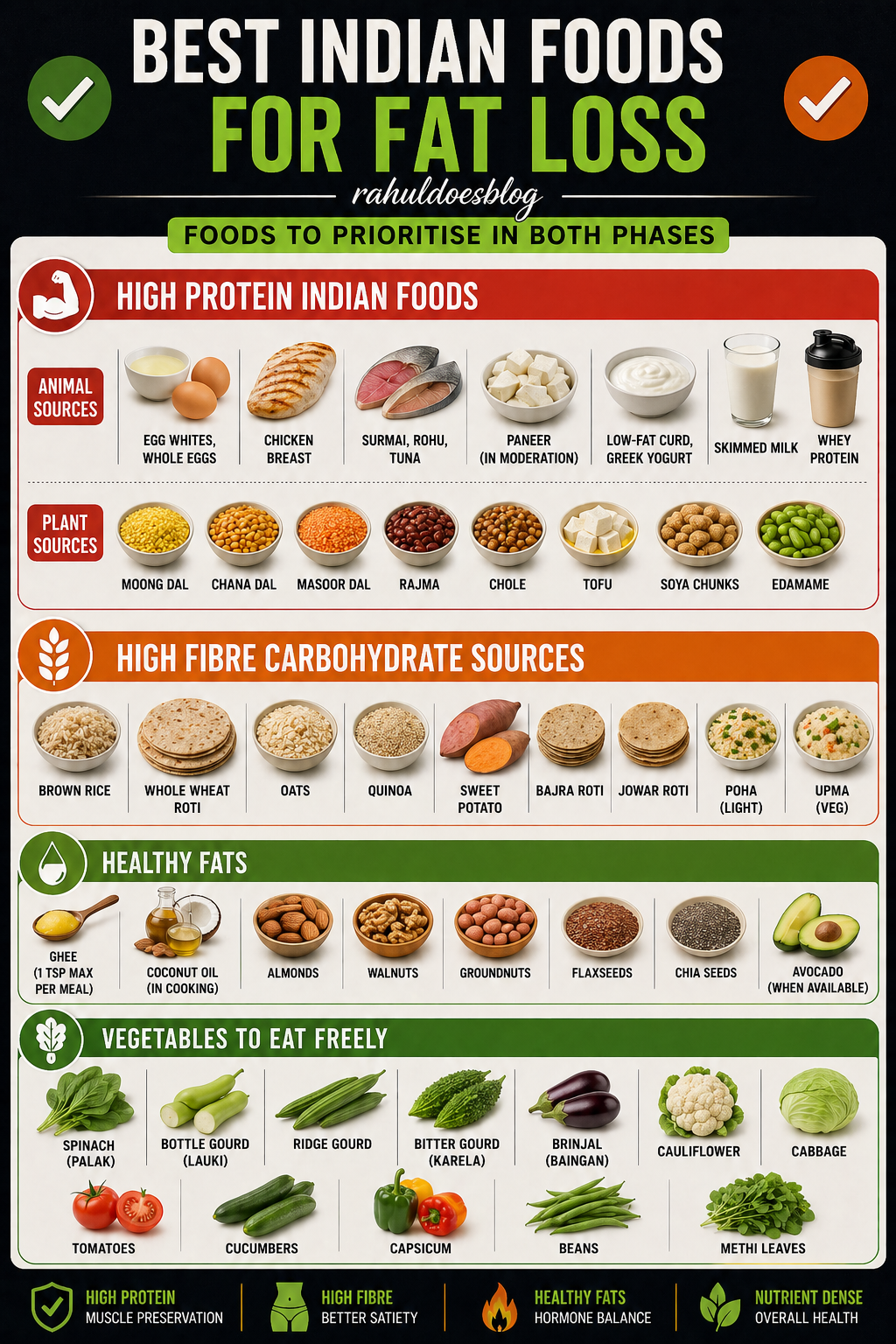
Best Indian Protein Sources
Whole foods should always come first. Here are the best protein sources available in Indian kitchens:
Spread Protein Across the Day
Hitting your daily total matters — but so does how you distribute it. Research shows protein synthesis is maximised when spread across 4 to 5 meals, each containing 20 to 40 grams of high-quality protein.
A practical structure for a 160g daily target: 35–40g at breakfast (eggs or a protein shake) · 20–25g mid-morning (curd or whey) · 45–50g at lunch (chicken, fish or paneer with dal) · 25–30g post-workout (whey shake) · 40–45g at dinner (fish, tofu or eggs).
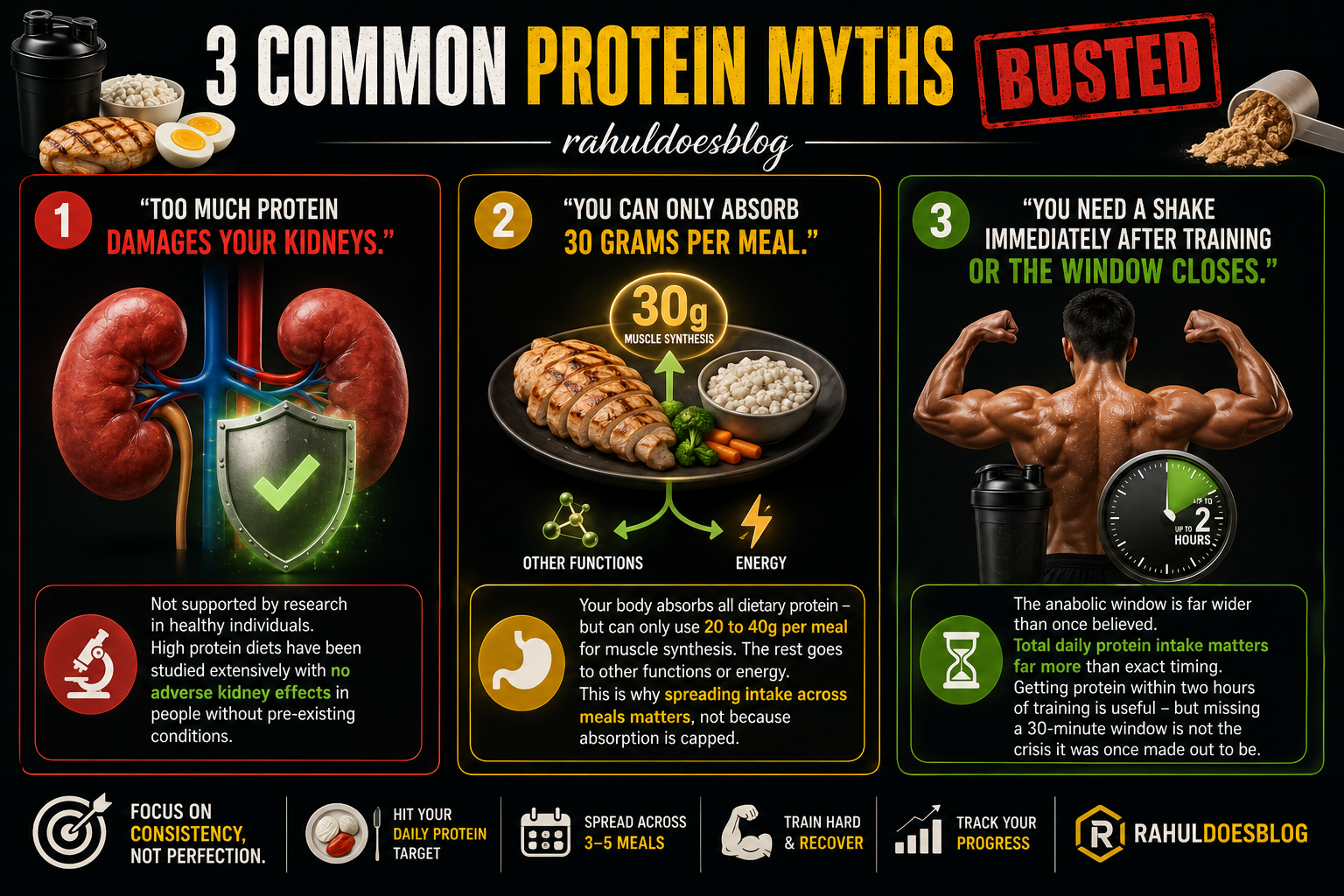
3 Common Protein Myths — Busted
Final Thoughts
Protein is the single most important macronutrient for fat loss, muscle building and healthy ageing. The government minimum is not your target — it is the bare minimum to avoid deficiency. Your real target, based on your goals, is likely two to three times higher.
Use the calculator above to find your number. Hit it consistently across four to five meals every day, prioritising whole Indian foods — chicken, eggs, dal, soya chunks, curd and paneer — with whey protein as a practical top-up.
Give it eight weeks of consistency. The results will follow.
Disclaimer: This article is for informational purposes only. Individual protein requirements vary. Consult a registered dietitian or sports nutritionist for personalised guidance. If you have kidney or liver conditions, speak to your doctor before increasing protein intake.